Why do manufacturers still choose Spur Gears when newer transmission designs attract attention? Their value begins with simplicity. Spur Gears use straight teeth, parallel shafts, and predictable force paths. This structure supports efficient power transfer, straightforward inspection, and economical production. Fewer geometric complications can also simplify replacement planning.
Grand View Research’s Industrial Gears Market Size, Share and Trends Analysis Report, 2024–2030, identifies automation, material handling, and industrial machinery as important growth areas. These sectors demand compact, serviceable, and repeatable transmission systems. Spur Gears often answer that need in conveyors, pumps, indexing equipment, and low-to-medium-speed drives. Their efficiency can exceed 95% in carefully designed systems, although the result depends on lubrication, alignment, tooth quality, and operating load.
Small details matter.
Robert L. Norton, a respected machine-design author, states, “Gears are used to transmit motion and power from one shaft to another.” That practical definition explains their continuing industrial relevance. AGMA standards and ISO 6336 calculation methods help engineers evaluate tooth strength, surface durability, noise, and service life. Such standards support reliable decisions, but they cannot replace field experience.
Spur Gears are not perfect. Straight teeth can create noticeable noise, vibration, and impact during engagement, especially at higher speeds. I have seen a theoretically efficient gearbox lose performance after poor shaft alignment and insufficient lubrication. That uncomfortable lesson deserves attention. Engineers should compare helical, bevel, or planetary alternatives before specifying Spur Gears. Yet where simplicity, cost control, maintainability, and dependable torque transmission matter, Spur Gears remain a serious industrial choice.
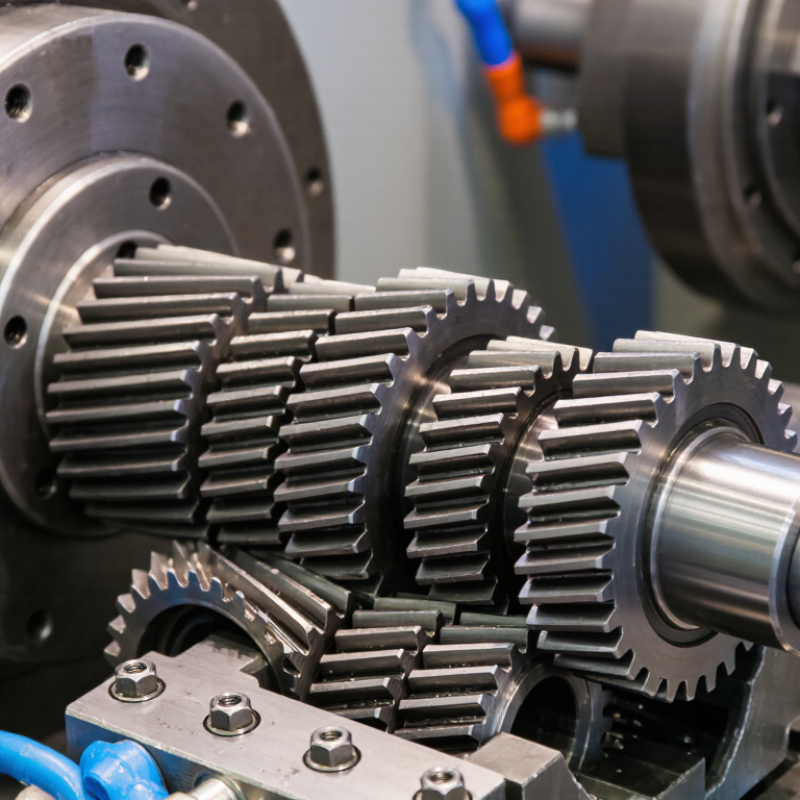
Why Choose Spur Gears for Industrial Applications?
What Spur Gears Are and How They Transfer Motion
A spur gear is a cylindrical wheel with straight teeth cut parallel to its shaft. Each tooth pushes against the matching tooth of another gear. This contact transfers torque and controls rotational speed. Unlike helical gears, spur gears do not create axial thrust. Their simple geometry also makes inspection and production relatively straightforward.
When the driving gear rotates, its teeth press into the driven gear’s teeth. The driven gear then turns in the opposite direction. Gear size determines the motion ratio. A small gear driving a larger gear increases torque but reduces speed. For example, a conveyor drive may use this arrangement to move heavy loads steadily. Accurate tooth spacing and proper lubrication reduce noise, wear, and heat.
In industrial equipment, spur gears suit pumps, conveyors, actuators, and compact speed reducers. They work well when shafts remain parallel. During an inspection, a technician should check tooth surfaces, backlash, alignment, and lubricant condition. Even a small misalignment can concentrate pressure on one tooth. That detail is easy to miss. Spur gears are efficient, but they are not perfect for every machine. At higher speeds, their sudden tooth engagement can produce noticeable noise and vibration. Engineers should review load cycles, operating speed, enclosure design, and maintenance access before selecting them. A clean calculation is only a starting point.
| Engineering Dimension | Typical or Standard Data | Industrial Relevance |
|---|---|---|
| Gear Type | Cylindrical gear with straight teeth parallel to the rotational axis | The simple tooth layout makes spur gears easy to manufacture, inspect, install, and replace in parallel-shaft power transmission systems. |
| Motion Transfer | External gears rotate in opposite directions; internal gears rotate in the same direction | A spur gear pair transfers torque through successive tooth engagement while maintaining a constant angular-velocity relationship. |
| Speed Ratio | i = z2 / z1 = n1 / n2 | The ratio is determined by the tooth counts. For example, a 20-tooth pinion driving a 60-tooth gear produces a nominal 3:1 reduction. |
| Torque Relationship | T2 ≈ T1 × i × η | A reduction in speed normally increases output torque, subject to tooth strength, shaft strength, bearing capacity, and transmission losses. |
| Pressure Angle | 20° is the widely used standard; 14.5° and 25° designs also exist | The pressure angle affects radial force, tooth strength, contact conditions, and compatibility between mating gears. |
| Helix Angle | 0° | Because the teeth are straight, spur gears do not generate the continuous axial thrust associated with helical gears, simplifying bearing and housing design. |
| Center Distance | a = m(z1 + z2) / 2 for standard gears | Center distance can be calculated directly from module and tooth count, helping designers establish compact and repeatable layouts. |
| Module | Metric module m is commonly selected from standardized series; the correct value depends on load, speed, material, and allowable stress | A larger module generally provides thicker and stronger teeth, while a smaller module supports compact, finer-pitch mechanisms. |
| Contact Ratio | Typically greater than 1.0; values around 1.2–1.6 are common design targets for smooth tooth engagement | A contact ratio above 1 ensures that one tooth pair begins carrying load before the preceding pair disengages. |
| Power Transmission Efficiency | Approximately 95%–99% for a properly aligned, lubricated spur-gear mesh; actual results vary | Low sliding compared with many other gear arrangements can provide efficient power transfer, especially at moderate operating speeds. |
| Load Direction | Tangential force transmits torque; radial force acts toward the gear center | The absence of axial tooth force reduces thrust-bearing requirements, but shafts and radial bearings must still be sized for separating forces. |
| Typical Materials | Carbon steel, alloy steel, stainless steel, cast iron, bronze, and engineering plastics | Material selection depends on torque, wear, corrosion exposure, temperature, noise limits, lubrication, and required service life. |
| Surface Treatments | Carburizing, nitriding, induction hardening, through-hardening, and surface finishing | Heat treatment and finishing can increase surface hardness, wear resistance, bending strength, and resistance to pitting. |
| Manufacturing Methods | Hobbing, shaping, milling, broaching, powder metallurgy, molding, and precision grinding | The straight-tooth geometry is compatible with widely available production processes, supporting economical manufacture across many volume ranges. |
| Operating Noise | Generally higher than comparable helical gears at high speed because tooth engagement is less gradual | Spur gears are often preferred where simplicity, cost, and efficiency are more important than very low noise or vibration. |
| Speed Capability | Suitable for low- to moderate-speed applications; the practical limit depends on pitch, accuracy, balance, lubrication, and dynamic loads | High-speed operation requires accurate tooth geometry, rigid shafts, precise alignment, suitable lubrication, and careful vibration control. |
| Backlash | A controlled clearance is required between mating tooth flanks; the amount depends on module, accuracy grade, speed, and thermal conditions | Backlash prevents binding and allows lubrication, but excessive clearance can reduce positioning accuracy and increase impact noise. |
| Maintenance Needs | Periodic inspection of lubrication, tooth wear, pitting, scoring, alignment, and backlash | A straightforward geometry makes visual inspection and condition monitoring relatively simple compared with more complex gear arrangements. |
| Common Industrial Uses | Conveyors, pumps, machine tools, packaging equipment, actuators, indexing systems, reducers, and instrumentation | They are well suited to parallel-shaft systems requiring predictable speed reduction, reliable torque transmission, and cost-effective maintenance. |
| Primary Advantages | Simple geometry, high efficiency, low manufacturing complexity, compact axial layout, and no inherent axial thrust | These characteristics make spur gears a practical choice when operating conditions do not require the smoother engagement or higher-speed capability of alternative gear types. |
| Key Design Limitations | Noise and vibration can increase with speed, load concentration can result from misalignment, and shock loads can damage teeth | Proper sizing must consider bending stress, contact stress, lubrication, alignment, duty cycle, temperature, and the required safety factor. |
Their straight teeth transmit motion efficiently between parallel shafts. They also support predictable torque transfer and easy inspection.
Tooth profile, face width, pitch diameter, pressure angle, backlash, and shaft alignment all matter. Small errors can increase vibration and wear.
Even a slight offset can create uneven loading. A fraction of a millimeter may increase noise, vibration, and tooth wear. Check alignment during installation.
Lubricant must match speed, temperature, and enclosure conditions. Too little may cause scuffing. Too much can create drag and heat.
They can work in dusty facilities with enclosed housings and suitable seals. Moisture near washing areas requires extra inspection. Check oil contamination and surface condition regularly.
Review continuous torque, peak torque, speed, service life, and reduction ratio. Also confirm module, pressure angle, bore size, backlash, and face width.
Straight teeth may produce noticeable noise at higher speeds. Poor alignment, limited manufacturing accuracy, and excessive backlash can worsen it. Precision grinding may help.
No. High-speed machinery or sudden impact loads may require another gear arrangement. A calculation can still miss field conditions. Review actual loads after installation.
Spur Gears are simple, reliable mechanical components that transmit rotational motion between parallel shafts through straight-cut teeth. Their direct tooth engagement provides consistent speed ratios and efficient power transfer, making them a practical choice for many industrial systems. Their design supports easy production, straightforward installation, and convenient inspection, while their compact structure can fit into a wide range of machinery.
In manufacturing environments, Spur Gears are valued for their durability, predictable performance, and cost-effective maintenance. They can be used in conveyors, machine tools, automation equipment, material-handling systems, and other applications where moderate noise and vibration are acceptable. When selecting the right gear, engineers should consider load capacity, operating speed, torque, tooth size, materials, lubrication, accuracy, environmental conditions, and available space. Properly matching these factors helps ensure stable operation, long service life, and efficient performance.

 Kineto Motor