Why Choose Helical Gears for Industrial Applications?

Time:2026-10-18 Author:Sophia
0%

Industrial machinery rarely fails because of one dramatic decision. More often, small transmission losses, vibration, and neglected maintenance accumulate over time. Helical Gears address several of these challenges through angled teeth that engage progressively. This geometry creates smoother contact than many straight-tooth alternatives. The result can be quieter operation, steadier torque transfer, and improved load distribution.

That difference becomes visible in real equipment. A conveyor may run beside workers for twelve hours daily. A gearbox may transmit power through dusty factory air without stopping production. In these conditions, helical gears can reduce impact loading and support higher operating speeds. Engineers typically assess tooth strength, surface durability, lubrication, shaft alignment, and thermal performance before selecting them. Established calculation methods and manufacturer test data provide useful guidance. However, catalog ratings should never replace application-specific analysis.

There are trade-offs. Angled teeth generate axial thrust, which demands suitable bearings and accurate housing design. They may also create more sliding friction than spur gears. Poor lubrication can quickly turn smooth meshing into heat, noise, and premature wear. Small errors matter. A practical evaluation should compare efficiency, service life, maintenance access, cost, and installation limits. Helical Gears are not automatically the best choice for every industrial drive. Their value depends on disciplined design and honest operating data. That is where judgment matters. A careful selection process can deliver dependable power transmission, but assumptions still deserve review.

Why Choose Helical Gears for Industrial Applications?

What Are Helical Gears and How Do They Work?

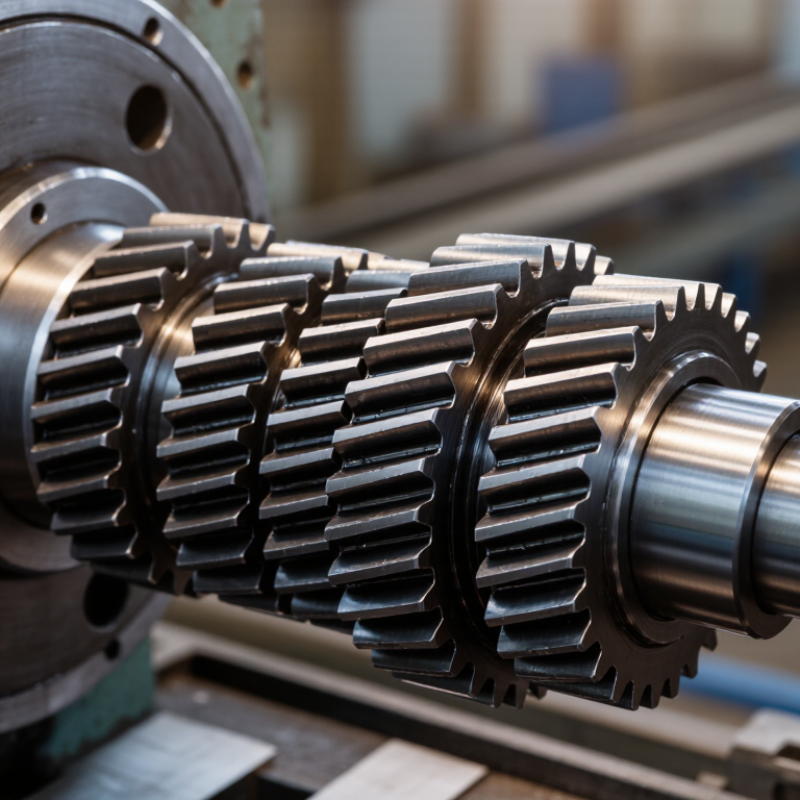
Helical gears use teeth cut at an angle around the gear body. Unlike straight-toothed gears, their teeth engage gradually. One tooth begins contact before another leaves it. This creates smoother torque transfer, lower impact, and noticeably quieter operation in conveyors, pumps, compressors, and machine tools.

The angled teeth also increase contact length. That helps distribute load across several teeth, but it creates axial force along the shaft. Bearings must control it carefully. Lubrication matters too. In a dusty factory, contaminated oil can quickly damage the tooth flanks. ISO 6336 provides calculation methods for gear load capacity, bending strength, and surface durability. Engineers still need real operating data. A spreadsheet cannot fully predict shock loads from a jammed conveyor.

Efficiency is another reason industrial designers select helical gears. A properly aligned single-stage helical gearbox often reaches roughly 94% to 98% efficiency, depending on size, lubrication, seals, and load. The U.S. Department of Energy’s Improving Motor and Drive System Performance sourcebook reports that motor systems consume more than 70% of industrial electricity. Small transmission losses therefore become expensive over long operating hours. Helical gears are not perfect. Their sliding contact can generate heat, and their axial load may require larger bearings. Field inspections should check noise, backlash, oil condition, and unusual temperature changes. A quiet gearbox is useful evidence, not proof of good condition.

How Helical Gears Transfer Motion and Torque

Helical gears transfer motion and torque through angled teeth that engage progressively. This gradual contact reduces impact and operating noise. It also helps maintain smoother rotation when machinery runs under changing loads. As the driving gear turns, its teeth push across the mating gear’s tooth faces. The motion becomes controlled rotary output. Torque moves through several teeth at once, spreading contact stress across the gear pair. This design suits conveyors, mixers, pumps, and machine tools. It is not perfect, though. The angled teeth create axial thrust, so shafts and bearings need proper support.

Tips: Check tooth alignment before installation. Use the lubricant specified for the load and speed. Inspect contact patterns during maintenance. Uneven marks may reveal shaft deflection, poor assembly, or excessive wear. Keep the housing clean. Small particles can damage the tooth surfaces surprisingly quickly.

In practical setups, a helical gearbox can provide steady torque at moderate and high speeds. However, efficiency depends on tooth geometry, lubrication, surface finish, and bearing condition. A larger helix angle may improve smooth engagement, but it can also increase axial force. Engineers should balance these effects rather than choosing a gear by size alone. I have found that vibration often appears before visible tooth damage. That clue deserves attention. A quiet gear is not automatically a healthy gear. Regular temperature, noise, and backlash checks make torque transmission more reliable over time.

Key Performance Benefits in Industrial Machinery

Why Choose Helical Gears for Industrial Applications?

Helical gears support reliable power transmission in demanding industrial machinery. Their angled teeth engage gradually, rather than striking suddenly during rotation. This reduces impact, operating noise, and vibration. Less vibration. That matters near sensors, cutting tools, and precision conveyors. The overlapping tooth contact also spreads force across several teeth. As a result, helical gears can handle higher loads within a compact gearbox. Their smooth engagement supports stable speed control, especially in pumps, compressors, mixers, and material-handling systems.

Performance depends on more than tooth shape. Helical gears create axial thrust, so the gearbox needs suitable bearings and accurate housing alignment. They may also produce more sliding friction than straight-cut gears. Proper lubrication becomes essential when shafts run continuously at high speed.

In a hot production area, contaminated oil can quickly increase tooth wear and operating temperature. Regular checks should include backlash, bearing noise, oil condition, and tooth-contact patterns.

A practical installation may run quietly for months, then develop a faint whining sound after alignment shifts. That sound should not be ignored. It can indicate uneven loading before visible damage appears. Helical gears are not automatically the best choice for every machine. Their benefits can disappear when designers overlook thrust support, thermal expansion, or maintenance access. Careful load calculations, material selection, and realistic service conditions make their performance more dependable. Some applications still need a simpler gear arrangement.

Common Industrial Applications of Helical Gears

Why Choose Helical Gears for Industrial Applications?

Common Industrial Applications of Helical Gears

Helical gears are widely used in conveyors, mixers, pumps, compressors, and machine tools. Their angled teeth engage gradually, reducing impact and operating noise. This smoother contact also helps transmit higher loads than many straight-tooth designs. In a factory, that difference matters. A conveyor carrying packed materials may run for many hours without frequent stops. Helical gearboxes also support controlled speed reduction in elevators, packaging equipment, and automated production lines. Their compact structure suits equipment with limited installation space.

Tips: Check axial thrust before selecting a helical gear set. The angled teeth create side forces that need suitable bearings and housing support. Use the correct lubricant and inspect tooth surfaces for pitting, scoring, or unusual wear. Alignment deserves attention too. Small errors can produce heat, vibration, and premature damage. Experienced maintenance teams often record temperature and sound during normal operation. These simple records make changes easier to identify.

Helical gears are not perfect. They may generate more heat than expected at high speeds, especially with poor lubrication. A quieter gearbox can still be working inefficiently. In steel mills, material handling systems, and wind-power equipment, engineers may choose single or double helical designs based on load direction and service demands. Double helical gears can reduce axial forces, but their structure is more complex and costly to manufacture. Selection should consider torque, speed, duty cycle, maintenance access, and real operating conditions—not only catalog ratings.

Why Choose Helical Gears for Industrial Applications? - Common Industrial Applications of Helical Gears

Industrial Application Why Helical Gears Are Used Typical Gear Arrangement Key Performance Benefits Important Design Considerations
Conveyors and Material Handling Helical teeth engage progressively rather than all at once, which helps transmit torque smoothly in continuous-duty drives. Helical reduction gearbox driving a conveyor head pulley, roller, or chain sprocket. Smooth motion, reduced vibration, reliable speed reduction, and good load-sharing capability. Account for starting torque, shock loads, belt or chain tension, lubrication, and axial thrust.
Pumps and Fluid-Handling Equipment Helical gearing provides steady torque transmission for pumps that operate for long periods at relatively constant speed. Parallel-shaft or inline helical gearbox between an electric motor and pump shaft. Low operating noise compared with many spur-gear arrangements and stable output speed. Proper sealing, oil selection, thermal management, and control of thrust loads are essential.
Machine Tools The gradual tooth engagement supports accurate, consistent power transmission and helps limit vibration during machining. Helical gear trains for spindle drives, feed systems, indexing units, or auxiliary axes. Improved running smoothness, compact reduction, and good torque capacity for a given gear size. Gear accuracy, backlash, alignment, stiffness, and heat generation can affect machining quality.
Compressors and Blowers Helical gears can transmit substantial power smoothly, making them suitable for many industrial air and gas systems. High-speed or multistage helical gear transmission between a motor, turbine, or driven compressor element. Smooth torque transfer, reduced vibration, and suitability for continuous operation. High-speed balancing, bearing loads, lubrication quality, and temperature control require close attention.
Industrial Mixers and Agitators The gradual tooth contact helps manage steady torque transmission in equipment that may experience changing process resistance. Helical gearbox connected to a vertical or horizontal agitator shaft. High torque density, smooth low-speed output, and dependable operation under continuous load. Starting and stall torque, shaft deflection, seal arrangements, and process-related shock loads must be evaluated.
Packaging and Processing Machinery Helical gears support synchronized motion where consistent speed and reduced vibration are important for product handling. Inline or parallel-shaft gearboxes for rollers, feeders, cutters, sealers, and indexing mechanisms. Quiet operation, repeatable motion, compact transmission, and good efficiency in moderate-speed drives. Hygiene requirements, washdown exposure, precise synchronization, and frequent start-stop cycles may influence selection.
Cranes, Hoists, and Lifting Systems Helical reduction stages provide smooth torque multiplication for lifting, travel, and positioning mechanisms. Multi-stage helical or helical-bevel gearbox connected to a drum, wheel, or lifting mechanism. High torque capacity, controlled acceleration, and reliable speed reduction. Braking, overload protection, duty cycle, impact loading, and safety factors are critical.
Renewable-Energy Drive Systems Helical gear stages can provide efficient speed conversion and smooth torque transfer in mechanically driven energy equipment. Helical or helical-bevel stages used in yaw, pitch, tracking, or auxiliary drive mechanisms. Compact design, good load capacity, and smooth operation across variable operating conditions. Variable loads, outdoor contamination, temperature changes, corrosion protection, and maintenance access should be considered.
General Industrial Automation Helical gears combine smooth engagement, useful reduction ratios, and strong torque transmission for many automated machines. Inline, parallel-shaft, or helical-bevel gearboxes integrated with electric motors and control systems. Low noise, dependable positioning, efficient power transmission, and flexible mounting options. Backlash, servo compatibility, thermal limits, lubrication, alignment, and required service life must be verified.

Note: Actual gear selection depends on transmitted power, speed, torque, duty cycle, load characteristics, installation position, lubrication, and required service life.

Design, Maintenance, and Selection Considerations

Helical gears suit many industrial applications because their angled teeth engage gradually. This reduces impact, operating noise, and load variation. Their larger contact ratio also supports steady torque transmission. However, efficiency depends on alignment, lubrication, speed, and load. A gearset can perform well on a test bench, yet fail early beside a hot, dusty conveyor.

Selection should begin with service factors, not catalogue torque alone. Define input speed, output torque, duty cycle, shock loading, ambient temperature, and allowable backlash. Then check face width, shaft arrangement, housing stiffness, and thermal capacity. ISO 6336 provides calculation methods for tooth load capacity and fatigue strength. AGMA rating practices offer another engineering reference. The International Energy Agency reported that industry consumed about 37% of global final energy in 2022. Small mechanical losses therefore deserve attention, especially in continuously operated drives. Oversizing is not always safer; it can increase cost, inertia, and poor low-load efficiency.

Tips: Use a documented oil specification and inspect it at fixed intervals. Record vibration, temperature, noise, and leakage together. ISO 20816 vibration guidance can support trend-based monitoring. A sudden temperature rise may indicate misalignment, blocked cooling, or lubricant breakdown. Field maintenance teams often find that contamination causes more trouble than tooth wear. No selection rule is perfect. Recheck the design after real operating data arrives, because the original duty estimate may be wrong.

FAQS

How do helical gears transfer motion and torque?

Angled teeth engage progressively as the driving gear rotates. Several teeth share the load, producing controlled rotary output.

Why do helical gears operate more quietly?

Their teeth contact gradually instead of striking suddenly. This reduces impact, vibration, and operating noise. Less vibration matters.

Where are helical gears commonly used?

They suit conveyors, pumps, mixers, compressors, machine tools, and material-handling equipment. These machines often need steady torque.

What is the main disadvantage of helical gears?

Their angled teeth create axial thrust along the shafts. Suitable bearings and accurate housing alignment are essential.

Does a larger helix angle always improve performance?

No. A larger angle can smooth engagement but increase axial force and sliding friction. Bigger is not automatically better.

What maintenance checks help protect helical gears?

Check backlash, bearing noise, temperature, lubricant condition, and tooth-contact patterns. Keep the housing clean. Small particles matter.

What can an unusual noise indicate?

A faint whine may signal alignment changes, uneven loading, or developing wear. Quiet operation alone proves little.

How important is lubrication for helical gearboxes?

Lubrication reduces friction and heat, especially during continuous, high-speed operation. Contaminated oil can quickly damage tooth surfaces.

Why should engineers avoid choosing gears by size alone?

Performance also depends on tooth geometry, load, speed, bearings, surface finish, and thermal conditions. A larger gear can still be unsuitable.

What should be checked before installing a helical gear system?

Verify tooth alignment, shaft support, bearing capacity, and housing accuracy. Installation mistakes can create uneven contact from the start.

Conclusion

Helical Gears are designed with angled teeth that engage gradually, allowing them to transfer motion and torque smoothly between parallel or intersecting shafts. Compared with straight-toothed gears, their gradual tooth contact reduces impact, noise, and vibration while supporting higher load capacity and efficient power transmission. These characteristics make them well suited to demanding industrial machinery that requires reliable, continuous operation.

Common applications include conveyors, pumps, compressors, mixers, machine tools, and various automated production systems. When selecting Helical Gears, engineers should consider speed, torque, gear ratio, load conditions, materials, lubrication, alignment, and operating environment. Proper installation and regular maintenance—such as checking tooth wear, lubrication levels, temperature, and shaft alignment—help extend service life and maintain performance. With appropriate design and care, helical gear systems provide a durable, quiet, and efficient solution for industrial motion control.

Sophia

Sophia

Sophia is a dedicated marketing professional with an exceptional depth of knowledge about her company's products and services. With a keen understanding of market trends and customer needs, she crafts insightful blog posts that not only inform but also engage readers, enriching the company’s online......