Global buyers need more than a catalog gear with a different finish. They need Custom Gear Solutions that match torque, speed, load cycles, space limits, and local operating conditions. A conveyor gearbox in a humid port faces different risks from a precision reducer inside a medical robot. Material choice, tooth geometry, lubrication, heat treatment, and surface protection all influence service life.
Dr. Hermann J. Stadtfeld, a respected gear technology expert, has said, “Gear design must connect calculation with manufacturing reality.” This principle remains important for international sourcing. A reliable supplier should explain why a specific module, pressure angle, steel grade, or hardening process fits the application. Clear drawings, traceable inspection records, and documented testing build confidence before production begins. Small details matter. A single-micron error can affect a high-speed assembly.
The best Custom Gear Solutions also support practical communication. Buyers may need metric dimensions, regional standards, multilingual documentation, or stable replacement supply. Experienced manufacturers can review CAD files, identify weak points, and suggest changes before tooling starts. Still, no specification is perfect. Early assumptions about noise, temperature, or installation space may prove wrong during field testing. That uncertainty deserves honest discussion, not polished promises.
This article examines the leading options for global buyers, including spur gears, helical gears, bevel gears, worm gears, planetary systems, and application-specific assemblies. It focuses on measurable performance, manufacturing experience, quality control, and long-term supplier reliability. The right choice is rarely the cheapest gear. It is the solution that performs consistently when conditions become difficult.
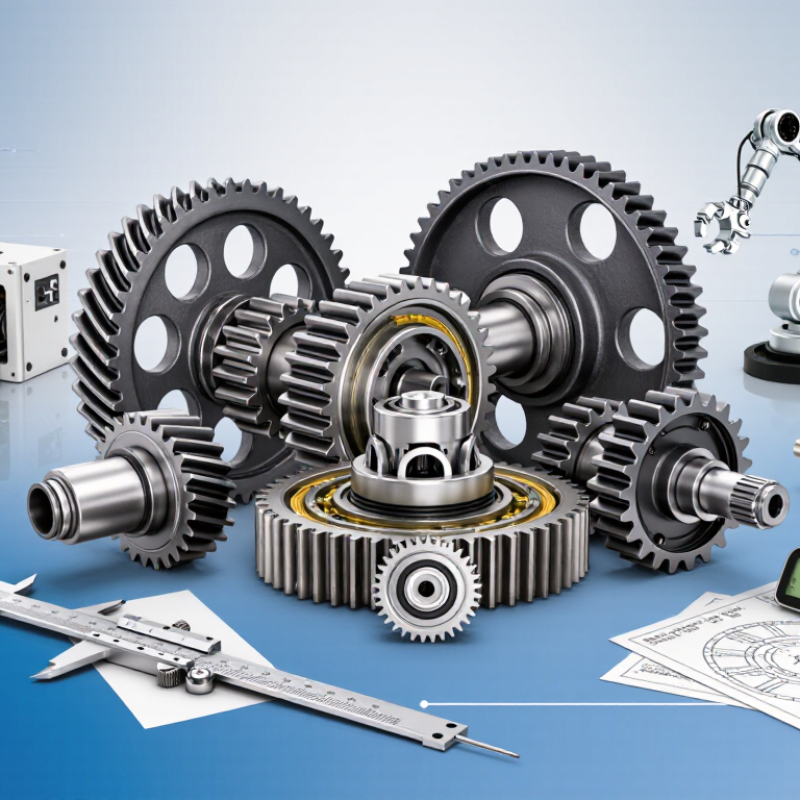
Custom gears vary by motion, load, speed, and installation space. Spur gears suit simple, efficient power transfer. Helical gears reduce noise and carry higher loads. Bevel gears change rotational direction in compact drivetrains. Planetary gears deliver high torque within a small package. Worm gears provide strong speed reduction, although efficiency and heat require careful review.
Global applications are expanding. The International Federation of Robotics reported 541,302 industrial robots installed worldwide in 2023. These systems often use planetary, harmonic, or precision spline gears. Wind energy also creates demand for durable gearbox components. The Global Wind Energy Council recorded 117 gigawatts of new wind capacity in 2023. Gearboxes must manage vibration, outdoor moisture, and changing loads. Electric vehicles add another challenge. Compact reduction gears need low noise, controlled backlash, and reliable thermal performance.
Material selection matters. Hardened alloy steel supports heavy industrial duty, while stainless steel helps resist corrosion. Surface treatments can improve wear resistance, but they may increase cost and inspection needs. According to the International Energy Agency’s Global EV Outlook 2024, electric car sales exceeded 14 million in 2023. That growth supports demand for compact transmission parts, yet not every application needs the most advanced design. Buyers should compare torque curves, duty cycles, tolerances, testing records, and regional standards.
A perfect specification is rare. In practice, small misunderstandings about shaft alignment can become expensive failures. Some projects still underestimate noise testing. That deserves more attention.
Global buyers rarely need “the strongest” custom gear. They need predictable performance in a specific working environment. Start by defining load, speed, duty cycle, noise, temperature, and expected service life. A compact gearbox may require 2,000 operating hours, while a lifting mechanism may face repeated shock loads. These figures shape torque, tooth geometry, backlash, and safety margins. Field experience shows that vague requirements create expensive revisions. That sounds obvious. It is often ignored.
Material selection should follow evidence, not habit. Case-hardened alloy steel can support high contact stress, while stainless steel may suit humid or washdown areas. Bronze components can reduce sliding friction in selected arrangements, but they may not fit every load profile. Ask for hardness data, heat-treatment records, dimensional reports, and corrosion testing. Also clarify the lubricant, sealing method, and ambient temperature. A material that performs well in a laboratory can behave differently beside dust, salt, or frequent cleaning.
Design requirements should connect engineering detail with installation reality. Specify mounting space, shaft interfaces, tolerances, inspection access, and replacement procedures. Digital models help, but a physical prototype can reveal awkward fasteners or unreachable grease points. Request sample testing under representative loads before approving volume production. Early designs are rarely perfect. One overlooked clearance may matter more than a polished drawing. Reliable suppliers explain test limits, document changes, and communicate uncertainty instead of promising flawless results.
| Custom Gear Solution | Typical Performance Profile | Common Material Options | Typical Heat Treatment or Finish | Key Design Requirements | Typical Applications | Global Buyer Considerations |
|---|---|---|---|---|---|---|
| Spur Gears | Parallel-shaft transmission; typical efficiency of 95–99% per properly lubricated mesh. Suitable for moderate-to-high torque at low or medium speed. | Alloy steel, carbon steel, stainless steel, bronze, acetal, nylon, or other engineering plastics. | Through-hardening, carburizing, nitriding, induction hardening, black oxide, or corrosion-resistant plating. | Module or diametral pitch, pressure angle, tooth count, face width, backlash, bore, keyway, runout, and noise limits. | Industrial machinery, conveyors, pumps, actuators, packaging equipment, and general power transmission. | Confirm metric or imperial standards, inspection method, material certificates, packaging protection, and replacement compatibility. |
| Helical Gears | Smooth and quiet operation with higher contact ratio than spur gears; typical efficiency of 94–98%. Generates axial thrust that must be supported. | Case-hardening steel, alloy steel, stainless steel, bronze, or engineered polymer for low-load applications. | Carburizing and hardening, nitriding, induction hardening, grinding, shaving, or precision honing. | Helix angle, hand of helix, thrust direction, bearing arrangement, contact pattern, backlash, and surface finish. | Gearboxes, compressors, machine tools, material-handling systems, and automotive or mobile equipment. | Specify shaft rotation, axial-load limits, lubrication grade, allowable noise level, and dimensional inspection standard. |
| Bevel Gears | Changes power direction, commonly by 90°. Straight bevel designs suit moderate speeds; spiral bevel designs provide smoother high-speed operation. | Carburizing steel, alloy steel, stainless steel, bronze, or cast iron for selected low-speed systems. | Carburizing, hardening, lapping, grinding, phosphating, or corrosion-resistant coating. | Shaft angle, gear ratio, cone distance, tooth geometry, mounting distance, contact pattern, and housing alignment. | Right-angle drives, agricultural machinery, industrial reducers, vehicle axles, and power-distribution systems. | Define shaft-angle tolerance, mounting datum, rotational direction, load spectrum, and field-service requirements. |
| Worm Gear Sets | High reduction in a compact arrangement, commonly from approximately 5:1 to 100:1. Efficiency can range from about 50–95%, depending on lead angle, materials, and lubrication. | Hardened steel worm paired with bronze, ductile iron, or engineered polymer worm wheel. | Case hardening, nitriding, grinding, bronze casting, precision hobbing, or anti-corrosion treatment. | Lead angle, center distance, self-locking requirement, thermal capacity, backlash, lubrication, and allowable sliding speed. | Lifting mechanisms, valves, conveyors, indexing equipment, positioning systems, and compact actuators. | Verify whether reverse driving is required; self-locking is application-dependent and should not be assumed without testing. |
| Planetary Gear Systems | High torque density, compact packaging, and load sharing. Typical single-stage ratios are approximately 3:1 to 10:1, with higher ratios using multiple stages. | Hardened alloy steel, carburized steel, stainless steel, bronze thrust components, and specialized bearing steels. | Carburizing, nitriding, grinding, superfinishing, shot peening, and controlled bearing-surface treatment. | Sun, planet, and ring gear alignment; carrier stiffness; bearing capacity; backlash; lubrication; and concentricity. | Robotics, servo drives, automation, aerospace-support equipment, wind-energy systems, and mobile machinery. | Request torque-cycle data, torsional stiffness, radial-load limits, efficiency by stage, and complete assembly drawings. |
| Rack and Pinion Systems | Converts rotary motion into linear motion. Travel speed and positioning accuracy depend on pitch, motor speed, preload, and guide rigidity. | Hardened steel, stainless steel, alloy steel, aluminum, acetal, or composite materials for light-duty systems. | Induction hardening, carburizing, nitriding, grinding, zinc coating, or corrosion-resistant passivation. | Module, pressure angle, rack length, pinion diameter, pitch accuracy, preload, backlash, straightness, and mounting datum. | CNC equipment, gates, linear actuators, robotics, automated storage systems, and positioning platforms. | Define usable travel, repeatability, environmental exposure, joining method for rack sections, and installation tolerances. |
| Internal Ring Gears | Compact planetary-drive component with high load-sharing potential and efficient enclosed power transmission. Performance depends strongly on profile accuracy and planet alignment. | Carburized alloy steel, nitrided steel, stainless steel, ductile iron, or selected powdered-metal grades. | Carburizing, nitriding, induction hardening, grinding, honing, or controlled dimensional stabilization. | Internal tooth geometry, wall thickness, concentricity, mounting holes, runout, tooth clearance, and carrier relationship. | Planetary reducers, slewing mechanisms, compact transmissions, robotics, and automated machinery. | Specify inspection access, distortion limits after heat treatment, ring roundness, and mating planetary gear data. |
| Timing Pulleys and Synchronous Drives | Positive, no-slip power transmission when correctly tensioned. Suitable for synchronized motion and clean operation without liquid lubricant. | Aluminum alloy, steel, stainless steel, cast iron, acetal, nylon, or reinforced polymer. | Anodizing, hard coating, black oxide, zinc plating, passivation, or wear-resistant tooth treatment. | Tooth profile, pitch, belt width, flange design, bore, keyway, concentricity, center distance, and tension range. | Conveyors, printers, packaging machines, textile equipment, laboratory instruments, and motion-control systems. | Match the pulley tooth profile with the belt standard, define contamination exposure, and specify static or dynamic balancing needs. |
| Precision Instrument Gears | Designed for low backlash, repeatable motion, and low noise rather than maximum torque. Typical applications prioritize dimensional stability and smooth rotation. | Stainless steel, hardened steel, brass, bronze, acetal, PEEK, nylon, or other low-friction engineering polymers. | Fine grinding, lapping, electropolishing, passivation, dry-film coating, or precision molding. | Backlash, profile error, lead error, torque ripple, bore accuracy, surface roughness, thermal expansion, and cleanliness. | Medical instruments, optical equipment, encoders, laboratory devices, small actuators, and measurement systems. | Provide temperature range, sterilization or cleanroom requirements, noise target, life-cycle count, and calibration criteria. |
| Corrosion-Resistant Custom Gears | Intended for humid, marine, chemical, food-processing, or outdoor environments. Load capacity depends on material strength, surface condition, and exposure conditions. | Stainless steel, duplex stainless steel, bronze, polymer composites, acetal, PEEK, or coated alloy steel. | Passivation, electropolishing, electroless nickel, approved polymer coating, anodizing, or food-contact-compatible finish where required. | Chemical compatibility, ingress protection, drainage, surface roughness, galvanic-corrosion control, sealing, and cleanability. | Marine equipment, food-processing machinery, water-treatment systems, chemical handling, and outdoor automation. | State the corrosive medium, concentration, temperature, cleaning chemicals, exposure duration, and applicable safety regulations. |
Custom gear buyers usually compare CNC hobbing, gear shaping, grinding, forging, and powder metallurgy. Each method suits a different production need. Hobbing handles many external gears efficiently, while shaping works better near shoulders or internal teeth. Grinding delivers tighter accuracy, but it adds cost and production time. Forging can improve strength for heavy loads, although secondary machining remains necessary.
Quality depends on more than a polished inspection report. Buyers should request material certificates, heat-treatment records, tooth-profile measurements, hardness results, and full part traceability. ISO 9001 supports consistent process control, while ISO 1328 helps define gear accuracy grades. Dimensional checks should include pitch, runout, backlash, and bore alignment. A coordinate measuring machine can verify geometry, but it cannot replace practical testing under load.
In production reviews, small errors often appear at the assembly stage. A gear may meet drawing dimensions yet create noise because of poor lubrication or shaft misalignment. No process is flawless. Therefore, global buyers should approve sample parts, review inspection plans, and confirm packaging for humidity and long-distance transport. I would also challenge vague terms like “premium quality.” Clear tolerances, testing methods, and acceptance limits are more reliable than attractive claims. Cost matters, but unstable quality can quietly erase the original savings.
Global buyers should judge custom gear suppliers beyond factory photographs and attractive unit prices. For protective workwear, travel equipment, or sports accessories, evidence matters more than promises. Request material certificates, pre-production samples, inspection records, and photographs of packed cartons. ISO 9001 certification helps, but it does not replace independent quality checks. The World Bank’s Logistics Performance Index 2023 compares 139 economies across customs, infrastructure, and timeliness. Use those dimensions when reviewing a supplier’s export history.
Calculate landed cost, not factory cost. Include tooling, sampling, packaging, duties, payment fees, insurance, and inland delivery. Ask for a price-validity period, because currency and freight changes can erase margins. Set measurable tolerances for stitching, dimensions, color, and load performance. Lead times need separate milestones: sample approval, material booking, production, inspection, and dispatch. Published estimates often ignore rework. Build a realistic buffer. That buffer feels expensive until a missed season becomes more expensive.
UNCTAD’s Review of Maritime Transport reports that over 80% of global merchandise trade moves by sea, making port planning essential. Still, air freight may protect urgent launches, while rail or road can suit regional replenishment. Clarify Incoterms, carton dimensions, pallet limits, and customs documents before ordering. The WTO’s Global Trade Outlook and Statistics 2024 projected merchandise trade growth of 2.6% in 2024 and 3.3% in 2025. Demand can improve, yet forecasts are not purchase orders. A supplier scorecard should combine audit evidence, total cost, lead-time reliability, and communication quality. No scorecard is perfect. Review it after every shipment.
Global buyers need more than attractive custom gear. They need a process that survives different customs rules, safety expectations, and communication styles. McKinsey’s 2024 Global Supply Chain Leader Survey reported that 9 in 10 respondents faced supply-chain challenges during the previous year. That reality makes compliance a design requirement, not a final inspection task.
A dependable supplier should confirm material composition, product dimensions, labeling, packaging, and destination requirements before production. Independent laboratory testing can support claims about strength, colorfastness, or chemical safety. Clear technical files also help buyers review certificates and shipment documents without repeated explanations. The World Bank’s 2023 Logistics Performance Index shows that customs and border procedures remain major differences between markets. Small document errors can therefore create large delays.
Communication needs structure. Use approved drawings, numbered revisions, sample photos, and written acceptance criteria. Short weekly updates work better than vague promises. Long-term support matters too. Buyers should ask about spare components, replacement orders, inspection records, and response times after delivery. The ISO Survey 2023 recorded more than one million ISO 9001 certificates worldwide, showing how widely quality systems are used. Certification helps, but it does not replace evidence from the actual production line. No workflow is flawless. Even experienced teams sometimes overlook a labeling change or assume one market’s rule applies everywhere. A careful review catches those uncomfortable gaps early.
Hobbing efficiently produces many external gears. Shaping suits internal teeth and areas near shoulders. Grinding offers tighter accuracy but increases cost and lead time. Forging supports heavy loads, though secondary machining may still be needed.
Request material certificates, heat-treatment records, tooth-profile measurements, hardness results, and full traceability. Also ask for the inspection plan and acceptance limits. A polished report alone proves very little.
Check pitch, runout, backlash, bore alignment, and tooth geometry. A coordinate measuring machine can verify geometry. It cannot replace load testing or assembly checks.
Poor lubrication or shaft misalignment can create noise during assembly. A gear may look perfect on paper. Real operation can expose small errors.
Review samples, inspection records, export history, packed-carton photos, and communication quality. Factory photographs are weak evidence. Independent checks remain useful, even with formal certification.
Include tooling, samples, packaging, duties, payment fees, insurance, inland delivery, and freight. Ask how long the quotation remains valid. A low factory price can hide expensive delivery problems.
Separate sample approval, material booking, production, inspection, and dispatch milestones. Ask whether rework is included in the estimate. Add a practical buffer. It feels costly until a missed launch costs more.
Confirm shipping terms, carton dimensions, pallet limits, customs documents, and delivery responsibilities. Sea freight suits planned volume, while air freight may protect urgent launches. Forecasts can help, but they are not purchase orders.
Custom Gear Solutions help global buyers address demanding applications across industries by matching gear types to specific operating conditions, load requirements, motion profiles, and installation environments. The process begins with clearly defining performance expectations, including torque, speed, noise, durability, temperature resistance, and service life. Material selection and design details are equally important, as they influence strength, weight, corrosion resistance, efficiency, and overall reliability.
Buyers should also compare manufacturing methods, dimensional accuracy, heat treatment, surface finishing, inspection procedures, and applicable quality standards. A reliable supplier evaluation should consider technical expertise, production capacity, cost transparency, lead times, packaging, shipping arrangements, and logistics support. Effective communication is essential for confirming drawings, specifications, testing requirements, and order updates across different regions. Finally, long-term support, replacement planning, documentation, and compliance with relevant local regulations can help reduce operational risks and maintain consistent performance throughout the product’s service life.

Kineto Motor