Automotive Gears determine how efficiently a vehicle converts engine or motor power into movement. Their design affects acceleration, fuel economy, noise, durability, and driving comfort. Inside a transmission, each gear has a specific job. Some multiply torque for steep hills. Others reduce engine speed during highway travel.
Common types include spur gears, helical gears, bevel gears, worm gears, planetary gears, and hypoid gears. Rack-and-pinion systems also guide steering movement. Manual and automatic transmissions may use several of these designs together. For example, helical gears provide smoother contact because their teeth engage gradually. However, they can create axial loads that require careful bearing support. Planetary gearsets offer compact layouts and multiple ratios. They are widely used in automatic and hybrid transmissions.
The right gear depends on more than tooth shape. Engineers examine load, speed, lubrication, heat, available space, and manufacturing accuracy. A small commercial vehicle may need strong low-speed torque. A performance car may prioritize rapid shifts and minimal power loss. Electric vehicles add another consideration: high motor speed can reduce the need for multiple ratios. Still, one design rarely solves every problem. That is worth remembering.
Real-world inspection also matters. A whining sound may indicate worn teeth, poor lubrication, or incorrect alignment. Metal particles in transmission fluid deserve prompt professional attention. Specifications should come from reliable manufacturer data and qualified service guidance. This overview explains how major Automotive Gears work, where they are used, and why their differences matter in modern vehicle design. Expect practical comparisons, not a simplistic “best gear” answer.
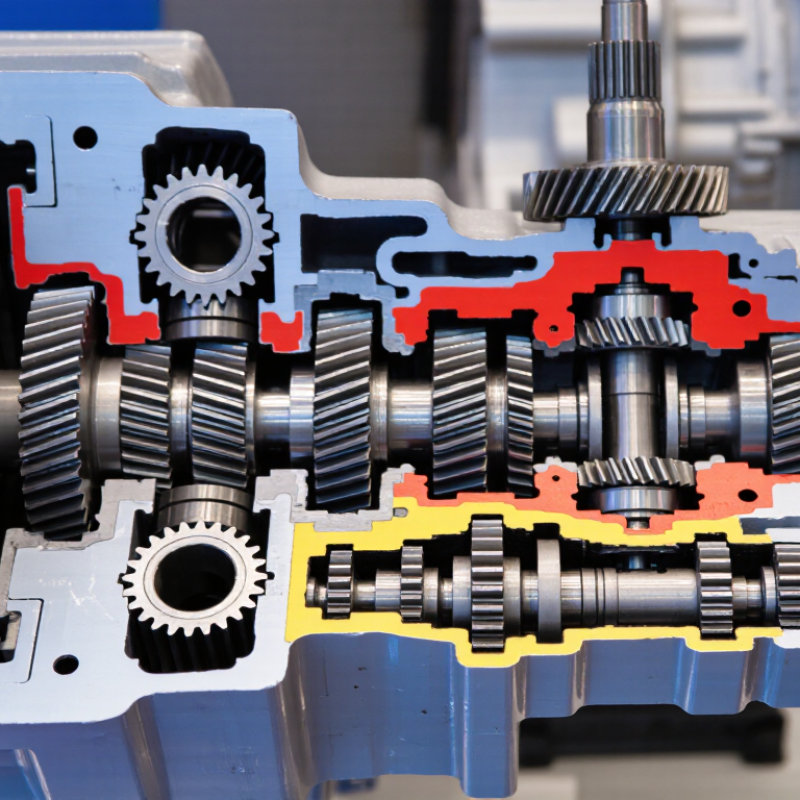
What Types of Automotive Gears Are Available?
Gear Types Classified by Function and Design
Automotive gears differ by both purpose and physical layout. Spur gears transfer power through straight teeth, but they can create noticeable noise at higher speeds. Helical gears use angled teeth. They run more quietly and carry heavier loads, although their sideways forces require stronger bearings. Bevel gears redirect torque between intersecting shafts, commonly within drive axles. Worm gears offer high reduction in compact spaces, but their sliding contact can reduce efficiency.
Planetary gears combine sun, planet, and ring gears in one compact assembly. Their design supports several ratios and distributes torque effectively. Automatic transmissions often use them. Differentials use bevel or related gearsets to let driven wheels rotate at different speeds during a turn. That small difference matters on a wet corner.
Function changes the classification. Reduction gears lower motor speed and increase wheel torque. Final-drive gears transfer power to the axle. Steering systems may use rack-and-pinion gearing. Electric vehicles increasingly use single-speed reduction units. The International Energy Agency reported nearly 14 million electric car sales worldwide in 2023, representing about 18% of new-car sales. This shift is reducing the need for traditional multi-ratio gearboxes in some applications.
The categories overlap. A planetary gearset can perform reduction, reversal, or torque multiplication. Gear selection also depends on load, packaging, lubrication, and efficiency. In practice, designers sometimes favor a less efficient gear because it fits the housing better. That trade-off is easy to overlook. Industry projections should also be read carefully, because testing methods and market definitions vary between reports.
Transmission gears control how engine power reaches the wheels. They adjust torque, speed, and driving response. Manual transmissions commonly use helical gears because their angled teeth reduce noise. However, these teeth create sideways forces that require strong bearings and accurate alignment.
Automatic transmissions often combine planetary gear sets with clutches and hydraulic controls. A single planetary set can provide several gear ratios in a compact space. Multiple sets allow smoother acceleration and reverse operation.
Dual-clutch systems use separate gear paths for even and odd ratios. They can shift quickly, but clutch heat and control accuracy remain important concerns.
Not every vehicle relies on traditional gears. Continuously variable transmissions use paired pulleys and a flexible belt or chain. They change the ratio gradually instead of selecting fixed gears. Final-drive systems also use bevel or hypoid gears to redirect power toward the wheels. Differential gears then let the left and right wheels rotate at different speeds during cornering.
Small details matter. Worn teeth may produce whining, vibration, or delayed engagement. Incorrect lubricant can increase heat and accelerate surface damage. A gear ratio may look efficient on paper, yet real traffic, temperature, and load can change the result. No design is perfect. Engineers still balance strength, weight, cost, noise, and service life. The analysis is not always clean, especially when comfort conflicts with efficiency.
What Types of Automotive Gears Are Available?
Differential and final-drive gears determine how power reaches the wheels. The differential lets left and right wheels rotate at different speeds during a turn. An open differential is simple, quiet, and affordable. However, it can send power toward a wheel with poor traction. That weakness becomes obvious on wet grass or loose gravel. A limited-slip differential reduces this effect by transferring more torque to the wheel with grip. Its clutch packs or helical gears need correct lubrication and careful inspection.
A locking differential connects both axle shafts more firmly. It improves traction, but tight turns may feel less smooth. Torque-vectoring systems vary wheel torque electronically or mechanically, helping cornering response. The final drive then changes speed and torque through its gear ratio. A lower ratio can improve pulling strength, while a higher ratio may reduce engine speed during cruising. Hypoid gears are common because they allow practical driveshaft placement and operate quietly when aligned correctly. Small errors matter.
During service, technicians check gear tooth patterns, backlash, bearing preload, and oil condition. Pitting, metallic particles, or a rising whine should not be ignored. No configuration is perfect. A setup designed for traction may increase heat, tire wear, or maintenance demands. Choosing the right arrangement depends on vehicle weight, road conditions, load requirements, and driving behavior.
The chart shows representative final-drive ratio ranges commonly used in different vehicle applications. Lower ratios generally support quiet, efficient cruising, while higher ratios increase wheel torque for heavier loads, steep grades, and off-road operation. Differential designs may be open, limited-slip, locking, or torque-vectoring, depending on traction and handling requirements.
What Types of Automotive Gears Are Available?
Specialized gears for steering and auxiliary systems must deliver accurate movement in limited space. Rack-and-pinion gears remain common in steering assemblies. The pinion rotates, while the rack moves the wheels left or right. This design feels direct and responsive. Worm gears provide high reduction in compact steering units. They can also resist unwanted reverse movement. However, excessive friction may make steering feel heavy.
Auxiliary systems use several specialized gear types. Helical gears support smoother operation in electric seat adjusters and window mechanisms. Small planetary gear sets can provide high torque from compact motors. Bevel gears redirect power around corners, which suits certain pumps and actuator layouts. In real inspections, I look for uneven tooth wear, dry lubricant, and unusual clicking sounds. These details often reveal alignment or load problems before failure occurs. A quiet gear is not always a healthy gear. Sometimes, reduced noise hides slow backlash growth.
Tips: Match the gear ratio to the required movement and load. Check backlash during maintenance. Use the specified lubricant and keep contaminants away. For steering systems, even slight looseness deserves careful investigation. Measure temperatures after operation, too. Heat can expose friction that a visual check misses. I would not rely on sound alone; that shortcut can be misleading.
| Gear Type | Primary Automotive System | Typical Function | Tooth or Gear Form | Shaft Arrangement | Main Advantages | Common Limitations |
|---|---|---|---|---|---|---|
| Rack-and-Pinion Gear | Steering systems | Converts rotary steering-wheel movement into the linear movement of the steering rack. | Pinion gear meshing with a straight or helical rack | Intersecting rotary and linear motion; pinion axis is generally perpendicular to rack travel. | Compact construction, direct steering response, low part count, and easy integration with electric power assistance. | Requires accurate alignment and lubrication; backlash or wear can reduce steering precision. |
| Worm-and-Roller Gear | Older and heavy-duty steering gear | Reduces steering effort while transmitting torque from the steering shaft to the sector mechanism. | Worm screw with a roller follower | Non-parallel shafts, usually arranged at approximately 90 degrees. | High mechanical advantage, robust packaging, and reduced sliding friction compared with a basic worm-and-sector design. | Bulkier than rack-and-pinion systems and generally less efficient than rolling-element alternatives. |
| Worm-and-Sector Gear | Conventional steering boxes | Provides a large speed reduction and converts steering-shaft rotation into sector-shaft movement. | Worm screw and toothed sector gear | Non-parallel shafts with an approximately right-angle relationship. | High torque multiplication and a durable design suitable for large steering loads. | Greater sliding contact, higher friction, and more adjustment sensitivity than modern rack-and-pinion units. |
| Recirculating-Ball Worm Gear | Heavy-duty steering systems | Uses recirculating balls between a worm shaft and nut to transmit steering input with high load capacity. | Worm shaft, ball nut, and sector gear | Input and output shafts are commonly positioned at approximately 90 degrees. | Low friction, high durability, strong shock-load resistance, and suitability for heavier vehicles. | More components, higher manufacturing cost, and a larger housing than rack-and-pinion steering. |
| Helical Gear | Electric power steering, pumps, actuators, and accessory drives | Transfers motion and torque smoothly between parallel shafts in compact auxiliary mechanisms. | Angled teeth with continuous tooth engagement | Usually parallel shafts; crossed arrangements are possible for special designs. | Quiet operation, high contact ratio, and greater load capacity than comparable spur gears. | Generates axial thrust and requires suitable bearings and accurate tooth alignment. |
| Spur Gear | Small auxiliary actuators, latches, pumps, and electromechanical modules | Provides a simple speed or torque change between parallel shafts. | Straight teeth parallel to the shaft axis | Parallel shafts | Simple geometry, high efficiency, easy inspection, and economical production. | More operating noise and impact loading at higher speeds compared with helical gears. |
| Planetary Gear Set | Electric steering actuators, brake boosters, seat systems, and compact auxiliary drives | Delivers speed reduction or torque multiplication within a short, coaxial package. | Sun gear, planet gears, carrier, and internal ring gear | Coaxial input and output shafts | High torque density, compact dimensions, balanced load sharing, and multiple reduction ratios. | More complex assembly, tight tolerance requirements, and higher sensitivity to lubrication quality. |
| Bevel Gear | Angle-drive auxiliary systems and selected steering mechanisms | Changes the direction of torque between intersecting shafts. | Conical gear teeth; straight or spiral bevel designs | Intersecting shafts, commonly at 90 degrees | Efficient right-angle power transmission and flexible packaging. | Requires precise setup, and straight bevel versions may produce more noise and vibration. |
| Hypoid Gear | Compact right-angle auxiliary drives and specialized final-drive applications | Transmits torque between offset shafts while providing reduction in a compact housing. | Spiral teeth on offset conical surfaces | Non-intersecting, offset shafts | High load capacity, smooth engagement, and flexible packaging around vehicle structures. | Substantial sliding action requires specialized lubricant and careful control of heat and wear. |
| Internal Ring Gear | Planetary steering and auxiliary drive assemblies | Provides the internal meshing element needed to create compact planetary reductions. | Inward-facing involute teeth | Coaxial with the sun gear and planetary carrier | Efficient use of space, high torque density, and flexible speed-ratio arrangements. | Internal tooth inspection and manufacturing are more demanding than for standard external gears. |
Note: Gear selection depends on steering torque, required reduction, package space, operating speed, noise targets, efficiency, lubrication, durability, and allowable backlash.
Automotive gears come in several forms, including spur, helical, bevel, planetary, and worm gears. Each design answers a different packaging and torque requirement. Spur gears transfer power efficiently, but their straight teeth can create noticeable noise. Helical gears run more quietly because contact develops gradually. They also produce axial loads. Bevel gears redirect torque between intersecting shafts, while planetary gears deliver high torque in a compact space.
Material selection strongly affects gear life. Carburized alloy steel is common for heavily loaded transmission gears because it combines a hard surface with a tougher core. Through-hardened steel suits less severe loads and simpler production. Powdered metal can reduce waste and support complex shapes, although porosity may limit impact strength. Some electric-drive applications use specialized steels for high-speed operation. Material certificates matter, but they do not replace testing.
Manufacturing begins with forging, casting, or powder compaction. Cutting methods include hobbing, shaping, and milling. Heat treatment then changes hardness, strength, and dimensional stability. Grinding or honing can improve tooth accuracy and reduce surface roughness. Small errors matter. A slight profile deviation may increase vibration, heat, and wear. Performance also depends on lubrication, tooth contact, backlash, load cycles, and alignment. In practical inspections, technicians should check tooth patterns, hardness, runout, and unusual noise. No material wins everywhere. Design compromises remain, and engineers should question assumptions when operating conditions change.
Transmission gears adjust engine torque, speed, and driving response before power reaches the wheels. They shape how the vehicle accelerates and cruises.
Their angled teeth reduce operating noise and provide smoother contact. However, they create sideways forces. Strong bearings and accurate alignment are necessary.
They often combine planetary gear sets, clutches, and hydraulic controls. One compact planetary set can provide several ratios. Multiple sets support smoother shifts and reverse movement.
It uses paired pulleys with a flexible belt or chain. The ratio changes gradually instead of selecting separate gears. Acceleration can feel smooth, but real results depend on heat, load, and traffic.
It allows the left and right wheels to rotate at different speeds. Without this movement, tire scrub and drivetrain stress can increase during turns.
An open differential is quiet, simple, and affordable. Yet it may send power toward a slipping wheel on wet grass or loose gravel.A limited-slip design transfers more torque toward the wheel with better grip. A locking design improves traction, but tight turns may feel less smooth.
A lower ratio can improve pulling strength under heavy loads. A higher ratio may reduce engine speed during highway cruising. The paper result is not always the road result.
Watch for whining, vibration, delayed engagement, pitting, or metallic particles in the oil. Rising noise deserves attention. Small tooth damage can become expensive quickly.
Rack-and-pinion gears provide direct steering movement. Worm gears offer compact reduction and may resist unwanted reverse movement. Small planetary sets deliver high torque from compact motors.A quiet gear is not always healthy.
Check tooth patterns, backlash, bearing preload, temperatures, and lubricant condition. Use the specified lubricant. Keep dirt away from gear surfaces.Do not rely on sound alone.Slight steering looseness needs careful investigation. Heat may reveal friction that a visual inspection misses. Some assessments remain imperfect, especially when comfort conflicts with efficiency.
Automotive Gears come in a wide range of types, each designed to manage torque, speed, direction, or power distribution within a vehicle. Transmission gears control the relationship between engine output and wheel speed, while differential and final-drive gears transfer power to the wheels and allow them to rotate at different speeds during turns. Their designs may include different tooth profiles, ratios, arrangements, and operating methods to meet the requirements of passenger vehicles, commercial vehicles, and specialized systems.
Beyond the main drivetrain, specialized gears support steering, braking assistance, pumps, and other auxiliary functions. Gear performance depends on material strength, heat resistance, dimensional accuracy, lubrication, and manufacturing quality. Common production methods include machining, forging, powder processing, and heat treatment, each influencing durability, noise, efficiency, and maintenance needs. Selecting the right gear configuration requires balancing load capacity, operating speed, space, cost, and long-term reliability.

Kineto Motor