Choosing the best Synchronous Gears from China requires more than comparing prices or catalog photographs. The real decision begins with application details. A gearbox for a conveyor may tolerate different noise levels than a high-speed industrial drive. Tooth accuracy, backlash, helix alignment, surface hardness, and thermal stability all deserve close attention.
Dr. Hermann J. Stadtfeld, a respected gear-technology specialist, has stated, “Gear accuracy begins with process discipline, not the final inspection.” This principle remains highly relevant when evaluating Chinese manufacturers. Strong suppliers should explain their steel grades, carburizing methods, grinding equipment, and inspection routines. Ask for measurable evidence. ISO 1328 accuracy reports, material certificates, hardness records, and runout data can reveal more than polished marketing language. A useful factory visit may show CNC hobbing machines, controlled heat-treatment lines, and technicians checking tooth contact with blue compound.
Some manufacturers offer excellent engineering and stable export quality. Others depend heavily on subcontractors. That difference matters. A low quotation can hide inconsistent batches, unclear tolerances, or weak after-sales support. Still, no supplier is perfect. Even a capable factory may struggle with unusual module sizes, urgent customization, or incomplete drawings. Buyers should acknowledge that risk instead of promising certainty.
This guide examines leading Chinese options through practical criteria: manufacturing experience, gear accuracy, material control, testing capacity, customization, delivery reliability, and communication. The best Synchronous Gears are not simply the cheapest units. They are the gears that maintain smooth engagement, acceptable noise, and dependable service under real operating conditions. Evidence matters. So does judgment.
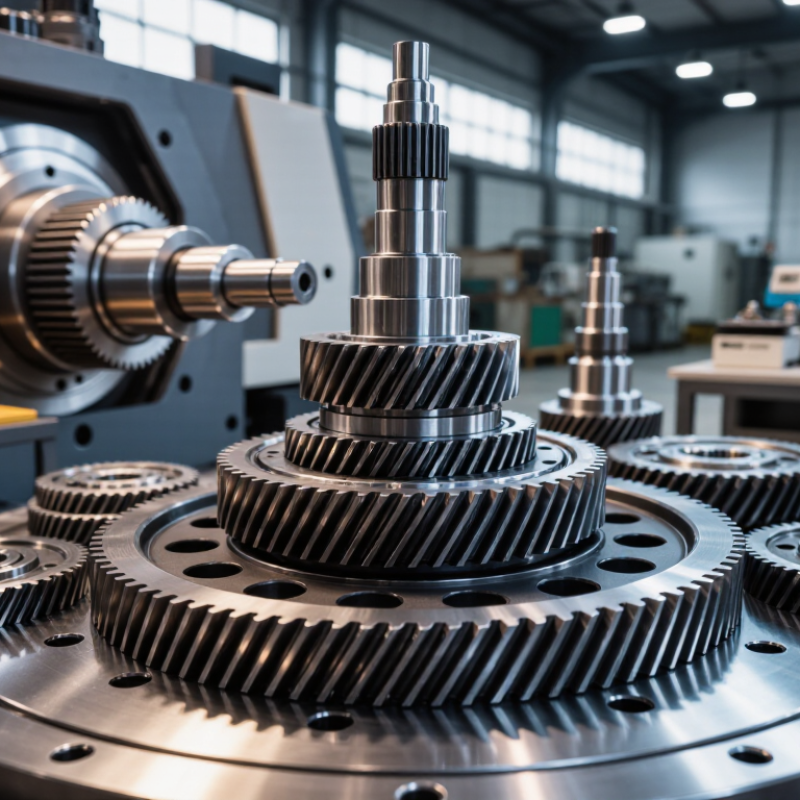
Synchronous gears are toothed wheels designed to keep two rotating shafts precisely timed. Their teeth engage directly, so one shaft controls the angular position of the other. This differs from ordinary power transmission, where small timing errors may be acceptable. In an engine, packaging machine, or indexing system, even one misplaced tooth can affect the entire cycle.
The working principle is simple but exact. If a driving gear has 20 teeth and the driven gear has 40, the second shaft turns at half the speed. Both shafts remain synchronized through the fixed tooth ratio.
Accurate center distance, matching tooth profiles, and controlled backlash are essential. Too much backlash causes positioning errors. Too little clearance may create heat and noise.
When assessing synchronous gears from China, buyers should examine more than surface finish. Request material certificates, hardness results, tooth inspection data, and runout measurements. Ask how heat treatment is controlled and whether each batch remains traceable. A practical check includes measuring gear noise, temperature, and alignment during a loaded test. Small defects can stay hidden during no-load operation. That assumption is risky. Some specifications also appear complete but omit lubrication conditions or operating cycles. A careful review should challenge those gaps before production begins.
High-quality Chinese synchronous gears begin with controlled metallurgy, not attractive packaging. The World Steel Association reported 1.89 billion tonnes of crude steel production worldwide in 2023. Volume alone proves little. Buyers should request material certificates, alloy composition, and heat-treatment records. Carburized alloy steel, accurate tooth geometry, and stable case depth support long service life.
Precision matters. A gear may look flawless yet produce noise under load. Check tooth contact patterns, backlash, hardness, and torsional fatigue results. ISO 6336 calculations can support the design, but physical testing remains essential.
The International Energy Agency reported that global electric-car sales exceeded 17 million in 2024. This growth increases demand for quieter, compact reduction gears. Chinese manufacturers with CNC grinding, controlled shot peening, and automated inspection can meet these requirements.
Look for measurable tolerances, surface roughness data, and end-of-line noise testing. Traceability matters. Each batch should connect to furnace records, inspection results, and operator controls. A polished sample can still hide inconsistent production. That is where many purchasing decisions become too optimistic.
Tips: Ask for three consecutive batch reports, not one perfect sample. Confirm the gear’s torque, speed, temperature, and lubricant conditions. Request dimensional inspection using calibrated equipment. Check whether the supplier follows ISO 9001 procedures and performs corrective-action reviews. Factory visits help, but they are not proof of permanent quality. Independent testing is wiser for critical applications.
China produces several practical types of synchronous gears for motion systems. The most common are timing belt pulleys with T, AT, HTD, and metric tooth profiles. Each profile suits different loads, speeds, and belt materials. T profiles support accurate positioning. HTD designs handle stronger torque. AT profiles often provide deeper tooth engagement.
Flanged synchronous pulleys help prevent belt movement during horizontal operation. Double-sided timing pulleys can drive two shafts or separate mechanisms with one belt. Manufacturers also produce aluminum pulleys for lighter equipment and steel pulleys for demanding industrial machinery. Stainless steel versions suit humid environments, although they may cost more and require careful machining.
Quality depends on more than the tooth shape. Buyers should check pitch accuracy, bore tolerance, runout, surface finish, and flange alignment. A reliable supplier should provide inspection records and material information. Ask for sample testing under real load. Small errors become visible quickly. In one practical review, a pulley looked perfect but produced noise because the bore was slightly misaligned. That detail changed the final selection. Custom tooth counts, keyways, taper bores, and surface treatments are also available. However, customization can increase lead time and introduce new measurement risks. Clear drawings matter.
The best option depends on verified performance, not the lowest quotation. When comparing Chinese synchronous gear manufacturers, check tooth accuracy, pitch tolerance, hardness, runout, and rated torque. ISO 1328 provides a useful framework for evaluating gear accuracy. Ask each supplier for inspection records, material certificates, and life-test results. A factory should explain its testing method clearly. Vague answers are warning signs.
China’s manufacturing scale can support competitive pricing and flexible production. The International Federation of Robotics reported 276,288 industrial robot installations in China during 2023, representing about 51% of global installations. This demand strengthens local machining and automation capabilities. However, production volume does not prove consistent gear quality. Compare at least three samples from different batches. Measure noise, backlash, temperature rise, and tooth wear under matching loads. I would not trust one perfect sample.
Tips: Request a small pilot order before signing a larger contract. Confirm whether the manufacturer controls heat treatment internally. Review calibration dates for testing equipment. Ask for a corrective-action report from a previous quality issue. Also, compare delivery stability and technical support, not only unit price. Some comparisons fail because buyers overlook packaging and storage conditions. That mistake is easy to repeat. A supplier audit, supported by ISO 9001 records, adds confidence, but it cannot replace independent testing.
Choosing the best synchronous gears from China starts with the application, not the catalog. Define torque, speed, operating hours, and required positioning accuracy. A compact gear may suit a packaging machine but fail under continuous heavy loads. Tooth profile matters. It controls engagement, noise, and backlash during operation. Helical teeth often run more quietly, while spur teeth simplify maintenance and reduce cost. Choose carefully.
Material selection should match the working environment. Alloy steel supports high loads and repeated cycles. Stainless steel is better for moisture, cleaning, or corrosive surroundings. Surface hardening can extend tooth life, but excessive hardness may increase brittleness. Ask for dimensional reports, hardness records, and material certificates. These documents make supplier comparisons more reliable. Do not trust appearance alone.
During factory trials, technicians should check center distance, tooth contact, vibration, and temperature. A small alignment error can create uneven wear within weeks. Request a sample batch before approving volume production. Test it with the actual shaft, lubricant, and operating speed. I once saw a technically strong gear underperform because the housing was poorly aligned. The gear was not the only problem. That detail is easy to miss. Supplier experience also matters, especially when custom modules, tight tolerances, or special coatings are required. Clear drawings and inspection standards reduce misunderstandings between teams. Cost remains important, but the cheapest option may bring louder operation and shorter service life.
Choosing the best synchronous gear depends on efficiency, load direction, operating speed, noise, and installation space. The chart shows typical single-stage transmission-efficiency ranges for common gear configurations used in precision power transmission.
Selection guide: Spur gears are efficient and economical for parallel shafts. Helical gears provide smoother and quieter operation. Double-helical gears suit high-load applications with improved axial-force balance. Planetary gears offer high torque density and compact packaging, while bevel gears are suitable when power must change direction. The displayed ranges are typical engineering values; actual performance depends on materials, lubrication, alignment, load, speed, and manufacturing accuracy.
Controlled metallurgy, accurate teeth, stable hardness, and consistent heat treatment are strong indicators. Ask for material certificates and case-depth records. Attractive packaging proves little.
Request dimensional reports, hardness results, material certificates, and life-test data. Three consecutive batch reports are better than one perfect sample. Traceability should connect batches with furnace and inspection records.
Compare tooth accuracy, pitch tolerance, runout, backlash, and rated torque. Use a recognized gear-accuracy standard when reviewing measurements. Vague testing explanations deserve caution.
Test samples from at least three batches. Measure noise, temperature rise, backlash, and tooth wear under matching loads. One polished sample can hide unstable production.
Define torque, speed, operating hours, and positioning accuracy first. A compact gear may suit light machinery but fail under continuous heavy loads. The catalog is not the application.
Helical teeth often reduce operating noise. Spur teeth can simplify maintenance and reduce cost. The better choice depends on load, alignment, and service needs.
Alloy steel supports high loads and repeated cycles. Stainless steel suits moisture, cleaning, or corrosive surroundings. Excessive hardness may improve wear resistance but increase brittleness.
Check center distance, tooth contact, vibration, and temperature. Test the sample with the actual shaft, lubricant, and speed. Small alignment errors can create uneven wear within weeks.
Not necessarily. Compare quality records, delivery stability, technical support, packaging, and storage conditions. I would not trust price alone. That assumption can fail.
Synchronous Gears are precision power-transmission components designed to maintain exact timing between rotating shafts through a positive engagement system. Unlike friction-based drives, they use matching teeth, profiles, or interlocking elements to prevent slippage and ensure consistent motion. This article explains how synchronous gears work and highlights the key qualities of high-quality products made in China, including accurate machining, durable materials, stable performance, low noise, reliable heat treatment, and strict quality control.
It also reviews major Chinese gear types, such as timing gears, toothed belt pulleys, chain sprockets, and customized synchronization components. To compare manufacturers, buyers should evaluate engineering capability, production consistency, material selection, inspection processes, customization support, delivery reliability, and after-sales service. The best choice depends on the application’s required torque, speed, precision, operating environment, noise level, maintenance needs, and budget. Careful technical communication and sample testing can help ensure the selected gears provide long-term, efficient, and dependable performance.

Kineto Motor