Choosing the best Standard Gear Couplings in China requires more than comparing prices or catalog dimensions. A reliable selection begins with torque, bore size, speed, misalignment, operating temperature, and maintenance access. These details determine whether a coupling performs smoothly or creates repeated downtime.
John Piotrowski, author of the Shaft Alignment Handbook, offers a practical reminder: “Alignment is not a one-time event; it is a condition that must be maintained.” His observation applies directly to Standard Gear Couplings. Even a strong coupling may fail early when shafts are poorly aligned, bolts are unevenly tightened, or lubrication is neglected. Small installation errors can become expensive vibration problems.
Chinese manufacturers now supply many gear coupling designs for steel mills, conveyors, pumps, cranes, and power equipment. However, product quality is not identical across every factory. Buyers should examine material certificates, heat-treatment records, balancing procedures, sealing design, and inspection reports. Ask for actual test data, not only attractive specifications. A coupling with hardened teeth and a well-finished hub can offer dependable service, but only when its working conditions match the design.
Experience also matters. I have seen buyers focus heavily on initial cost and overlook replacement time. That decision can feel reasonable at first. It may not remain reasonable after an unexpected shutdown. This guide compares Chinese Standard Gear Couplings through performance, manufacturing consistency, customization, service support, and total ownership cost. No catalog can answer everything. Field conditions still deserve careful judgment.
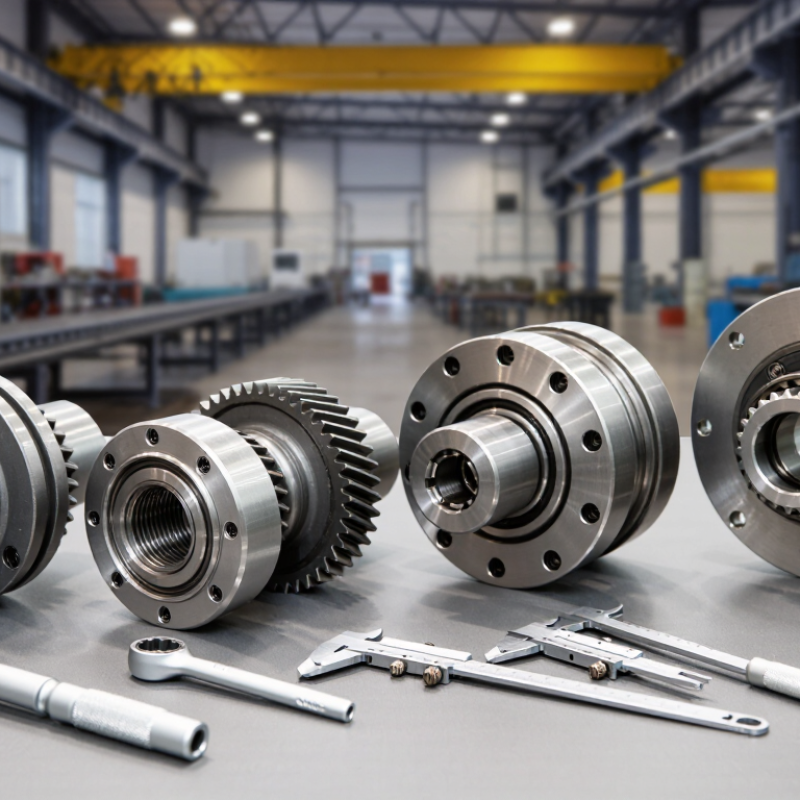
What Are the Best Standard Gear Couplings in China?
Selecting a standard gear coupling starts with torque, not price. Calculate torque with T = 9550P/n, where T is newton-metres, P is kilowatts, and n is rpm. Add a service factor for shock loads, starts, and reversing duty. AGMA 9000-D11 explains coupling terminology and rating practices, while API 671 offers stricter guidance for demanding process machinery. These references are useful when comparing Chinese suppliers, but catalog ratings are not always directly comparable.
Speed changes the decision. Higher rpm increases balancing, lubrication, and heat concerns. Bore size must match both shafts, keyways, and available hub length. A coupling with a correct bore can still fail if the key fit is poor. In field inspections, angular and parallel misalignment often appear together. Manufacturers may list separate values, yet the combined working limit is usually lower. This is where selection becomes less perfect. A generous rating does not replace alignment measurements.
Tips: Ask for rated torque, peak torque, maximum speed, bore tolerance, and misalignment limits in one data sheet. Request test records and material certificates. Check whether the design follows AGMA guidance or an equivalent national standard. Allow room for thermal growth. Many buyers overlook it. Industry maintenance reports repeatedly link alignment and lubrication practices with rotating-equipment reliability, although exact savings vary by plant. For Chinese procurement, verify dimensions, balancing grade, sealing details, and inspection records before approving a sample.
Gear Coupling Basics: Torque, Speed, Bore Size, and Misalignment Ratings
| Size Class | Rated Torque (N·m) | Maximum Bore (mm) | Maximum Speed (r/min) | Angular Misalignment (°) |
|---|---|---|---|---|
| Small | 250 | 35 | 6,000 | 1.00 |
| Medium | 1,000 | 65 | 4,000 | 1.00 |
| Large | 4,000 | 100 | 2,500 | 1.00 |
| Heavy Duty | 10,000 | 160 | 1,500 | 0.75 |
These typical industrial reference values show the usual trade-off between torque capacity, bore size, operating speed, and allowable angular misalignment. Final coupling selection should verify service factor, peak torque, keyway dimensions, balance requirements, operating temperature, and the manufacturer’s certified rating.
Selecting a gear coupling in China requires more than comparing torque tables. Chinese GB/T standards usually support local dimensions, materials, inspection methods, and product classification. They can simplify replacement when the connected equipment already follows Chinese engineering drawings. However, buyers should confirm the exact standard edition and application scope. A familiar code does not guarantee suitable performance.
AGMA guidance is useful for rating torque, service factors, tooth design, lubrication, and misalignment. It often helps engineers evaluate shock loads from crushers, rolling mills, and frequent starts. ISO standards provide another reference for terminology, testing, and international documentation. GB/T, AGMA, and ISO requirements may not match perfectly. Do not treat them as interchangeable.
Check the bore diameter, rated torque, peak torque, speed, axial movement, and installation space. For a dusty plant, inspect sealing details and grease retention around the sleeve. For a hot drive, verify lubricant temperature limits and material stability. Ask for dimensional drawings, material certificates, balance data, inspection records, and traceable test results. These details reveal more than a polished catalog page.
A practical selection may still be imperfect. Engineers sometimes choose by nominal torque alone, then discover startup shocks were underestimated. Recheck the service factor with actual motor data and driven-load behavior. Small assumptions can become expensive vibration.
Chinese standard gear couplings are not one uniform product; their range depends on torque, speed, bore size, and alignment. For low and medium torque, compact sleeve gear couplings suit pumps, conveyors, and general machinery. They use external and internal teeth to transmit motion through a short, rigid package. Typical catalog ratings may range from several hundred to several thousand newton-metres. Treat those figures carefully. Actual capacity falls when shock loads, poor lubrication, or angular misalignment increases.
For higher torque, flange gear couplings provide larger tooth diameters and stronger bolted connections. They commonly serve rolling equipment, crushers, mixers, and large drive systems. Many Chinese suppliers also produce drum gear couplings for heavy lifting machinery. Their curved tooth profile can improve contact during angular movement, but installation remains critical. For example, a coupling rated for 100,000 newton-metres may operate below 1,000 rpm, depending on bore and design. High-speed applications need a different review. Double-engagement, balanced gear couplings often perform better near 3,000 rpm or above. The exact limit depends on balance grade, lubrication, tooth finish, and permissible vibration.
I would not select from torque alone. Calculate peak torque, service factor, starting conditions, and shaft misalignment together. Check bore tolerance and sealing details. A small measurement error can create expensive wear. Some published ratings look impressive, yet omit fatigue life or speed derating. That omission deserves questions. Request test data, material certificates, dimensional drawings, and inspection records before approval. The best Chinese option is the one whose rating matches your real duty, not the largest number.
In shaft-line inspections, material selection often explains early coupling wear. Standard hubs commonly use forged alloy steel, such as 42CrMo or 40Cr. Sleeves may use medium-carbon steel when operating loads remain moderate. The material certificate should show chemical composition, tensile strength, and impact results. Without traceability, a polished surface proves very little.
Heat treatment controls both strength and dimensional stability. Quenching and tempering can produce a tough core for repeated torque shocks. Carburizing or induction hardening may improve tooth durability. Tooth hardness must match the load, lubrication, and expected alignment movement. Many applications use hardened teeth around 45–55 HRC, but higher hardness is not always better. Excessive hardness can increase brittleness and crack sensitivity. Inspectors should review hardness maps, metallographic reports, and final tooth runout. I have seen acceptable hardness readings hide uneven case depth. That mistake deserves more attention.
Tips: Ask for hardness testing at several tooth positions, not one convenient point. Check tooth profile accuracy, contact marks, bore tolerance, and balancing records. Request heat-treatment batch numbers and inspection dates. Compare these records with the drawing and operating temperature. A small documentation gap can become a large maintenance problem. Also, allow for honest uncertainty; supplier data may need independent verification before production approval.
When comparing China-made gear couplings, start with transmitted torque, peak load, speed, and shaft misalignment. ISO 14691 requires flexible coupling selection to consider operating conditions, torque variation, and service factors. A coupling rated only for nominal torque may fail during motor starts or sudden jams. Check the torque rating, bore tolerance, gear tooth hardness, and lubrication path. Inspect the actual test certificate, not only the catalog page.
Service life depends heavily on alignment and maintenance. AGMA 9000-D11 provides standardized coupling terminology, but it does not replace application testing. In field inspections, tooth wear often appears as uneven polishing near the gear mesh. That detail matters. The U.S. Department of Energy reports that motor-driven systems consume about 23% of U.S. electricity, making avoidable transmission losses financially important. Compare seal quality, backlash, heat treatment, and replacement intervals. I would not assume a higher hardness always means longer life; brittle teeth can create a different failure mode.
Cost comparison should include machining, oil, downtime, and installation labor. Industry market assessments published in 2024 place Asia-Pacific as the leading flexible-coupling demand region, supported by expanding industrial equipment production. Lower purchase cost can help, but a two-day shutdown may erase the saving. Request dynamic balancing data for high-speed service and confirm inspection records under ISO 9001 procedures. Some supplier data remains incomplete. That is worth questioning. A practical comparison uses three figures: safe operating torque, verified service hours, and total cost per operating year.
The comparison below summarizes typical specifications for commonly supplied standard gear-coupling configurations. Actual values depend on coupling size, bore, keyway, materials, lubrication, alignment, operating temperature, and service factor.
| Standard Coupling Configuration | Typical Nominal Torque | Typical Peak Torque | Typical Bore Range | Typical Maximum Speed | Permissible Angular Misalignment | Recommended Service Factor | Expected Operating Life* | Relative Purchase Cost | Typical Applications |
|---|---|---|---|---|---|---|---|---|---|
| Fully Enclosed Sleeve Gear Coupling | 0.4–6.3 kN·m | 0.8–12.6 kN·m | 16–100 mm | 3,600–5,000 rpm | Up to 1° | 1.25–1.75 | 8–15 years | Low to medium | General machinery, conveyors, pumps, fans |
| Flanged Gear Coupling | 2.0–40 kN·m | 4.0–80 kN·m | 30–220 mm | 1,500–3,600 rpm | Up to 1° | 1.50–2.00 | 7–14 years | Medium | Rolling mills, crushers, large drives |
| Vertical Gear Coupling | 1.0–25 kN·m | 2.0–50 kN·m | 25–180 mm | 1,000–3,000 rpm | Up to 0.75° | 1.50–2.25 | 6–12 years | Medium to high | Vertical pumps, hoists, mixers, vertical drives |
| Brake-Drum Gear Coupling | 1.0–20 kN·m | 2.0–40 kN·m | 25–160 mm | 1,000–3,000 rpm | Up to 1° | 1.75–2.50 | 6–12 years | Medium to high | Crane hoists, winches, lifting equipment |
| Continuous-Sleeve Gear Coupling | 0.8–12.5 kN·m | 1.6–25 kN·m | 20–125 mm | 2,000–4,500 rpm | Up to 1° | 1.25–1.75 | 8–15 years | Low to medium | Electric motors, gearboxes, process machinery |
| High-Torque Heavy-Duty Gear Coupling | 25–250 kN·m | 50–500 kN·m | 120–420 mm | 500–1,500 rpm | Up to 0.5° | 2.00–3.00 | 10–20 years | High | Steel plants, mines, marine drives, heavy reducers |
*Expected operating life assumes correct sizing, adequate lubrication, proper shaft alignment, controlled operating loads, and routine inspection. Cost is a relative indication for comparable size and material, not a fixed quotation.
Hubs often use forged alloy steel, such as 42CrMo or 40Cr. Sleeves may use medium-carbon steel. Material choice depends on load.
It should show chemical composition, tensile strength, and impact results. Traceability matters. A polished surface proves very little.
Quenching and tempering create a tough core for repeated torque shocks. Carburizing or induction hardening can improve tooth durability.
Many applications use approximately 45–55 HRC. Higher hardness is not automatically better. Excessive hardness may increase brittleness and cracking.
Test several tooth positions, not one convenient point. Review hardness maps and metallographic reports. Uneven case depth can remain hidden.
Check transmitted torque, peak load, speed, and shaft misalignment. Include motor starts, sudden jams, and operating temperature.
Maintain accurate alignment and suitable lubrication. Inspect tooth contact marks, backlash, seals, and wear patterns during maintenance.
Request test certificates, heat-treatment batch numbers, inspection dates, bore tolerances, and balancing records. Some data may remain incomplete.
Include purchase, machining, oil, installation labor, and downtime. A two-day shutdown can erase a lower purchase price.
No. Excessive hardness can create brittle teeth. I would verify actual service hours instead of trusting hardness alone.
Choosing the best Standard Gear Couplings in China requires more than comparing price or appearance. Buyers should evaluate torque capacity, operating speed, bore size, allowable angular and axial misalignment, and the coupling’s ability to handle shock loads. Chinese GB/T requirements, together with relevant AGMA and ISO principles, can provide a useful framework for checking dimensions, performance, safety factors, and interchangeability. Different gear coupling designs may be suitable for high-torque, high-speed, or space-limited applications, so selection should match the actual working conditions.
Material grade, forging quality, heat treatment, tooth hardness, surface finish, and lubrication design strongly influence service life. When comparing China-made gear couplings, review load ratings, fatigue performance, sealing quality, maintenance requirements, expected operating life, and total cost rather than focusing only on the initial purchase price. A reliable choice balances verified technical data, stable manufacturing quality, easy installation, and long-term operating value.

Kineto Motor