Who Are the Best Drive Gear Units Manufacturers in China?

Time:2026-11-07 Author:Amelia
0%

Selecting the best Drive Gear Units manufacturers in China requires more than comparing catalog prices. The right supplier must match the application, document its quality controls, and deliver consistent performance. A unit running beneath a conveyor has different demands from one inside a compact packaging machine. Torque, speed, duty cycle, mounting position, and operating temperature all matter.

Quality-management expert Joseph M. Juran captured a useful manufacturing principle: “Quality does not happen by accident; it must be planned.” For buyers, that means asking how a manufacturer verifies gear accuracy, material hardness, lubrication, noise, and heat under load. Request drawings, inspection records, and clear test criteria. Small details matter. A polished brochure cannot replace evidence.

This guide examines Chinese manufacturers through practical criteria: product range, engineering support, customization, production consistency, export experience, and after-sales service. It also considers whether suppliers can explain their limits, not just their strengths. That distinction can reveal a lot. A supplier that answers technical questions with specific data may be more dependable than one offering broad promises. Still, no checklist guarantees a perfect match. Specifications can look right on paper, while real operating conditions expose gaps. Compare shortlisted units against your own requirements, and verify critical claims before placing an order.
Who Are the Best Drive Gear Units Manufacturers in China?

What Drive Gear Units Are and Where They Are Used

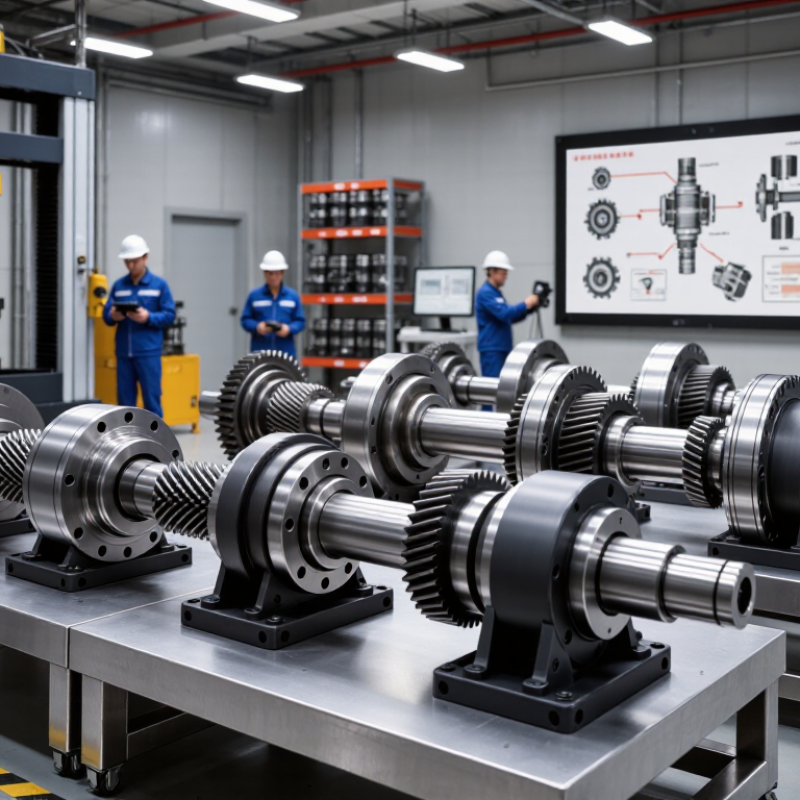
A drive gear unit combines gears, shafts, bearings, and a housing to adjust a motor’s speed and torque. A motor may spin too quickly for a conveyor belt or mixer. The gear unit reduces speed and increases usable torque, helping the machine move a steady load. Common arrangements include helical, bevel, and worm gearing; each suits different space, load, and efficiency needs. Applications range from packaging lines and wastewater equipment to mining conveyors and food-processing mixers. A compact unit may sit beside a belt, while a larger one drives a heavy kiln. Details matter.

The International Energy Agency’s 2011 report, Energy-Efficiency Policy Opportunities for Electric Motor-Driven Systems, estimated that motor-driven systems use about 45% of global electricity. That figure covers entire systems, not gear units alone, but it shows why selecting the right motor-and-gear combination matters. A gear unit is not automatically an efficiency upgrade: poor sizing, excess friction, or unsuitable duty cycles can waste energy and shorten service life. Buyers should compare rated torque, speed ratio, operating hours, ambient conditions, and maintenance access. A technically sound choice still needs real operating data; catalog ratings cannot fully capture every site’s dust, vibration, or changing loads.

How China’s Drive Gear Unit Industry Is Organized

Who Are the Best Drive Gear Units Manufacturers in China?

How China’s Drive Gear Unit Industry Is Organized

China’s drive gear unit industry operates through connected manufacturing tiers. Component suppliers produce gears, shafts, bearings, and housings. Gear-unit makers machine and assemble these parts, then test torque, backlash, noise, and heat buildup. Motor producers and automation integrators combine gear units with motors, controls, and machinery. Some factories serve several tiers, so the industry is not a neat ladder.

Demand is shaped by automation, machine tools, material handling, and factory upgrades. The International Federation of Robotics’ World Robotics 2024 report recorded 276,288 industrial robot installations in China in 2023, or 51% of global installations. This is not a gearbox sales figure, but it signals a substantial automation base that needs reliable motion components. The map is useful, but imperfect: supply chains overlap, and smaller workshops may serve several tiers. A manufacturer’s capabilities can vary sharply between standard units and custom designs.

Tips: Ask for rated torque, allowable input speed, backlash, and service-life test conditions. Request test records for the exact model, not only a general catalogue. Small details matter.

China’s industrial robot output provides a useful indicator of demand from automation industries that use drive gear units. The industry typically connects component and gearbox suppliers with equipment manufacturers and system integrators. Output figures are rounded annual totals; they show the broader demand context, not drive gear unit sales.

Source: National Bureau of Statistics of China, industrial robot output; 2023–2024 figures rounded.

Which Manufacturers Are Recognized for Drive Gear Units in China

In China, manufacturers recognized for drive gear units are generally judged by engineering consistency, not catalogue size. A credible supplier can explain its gearbox design, rated torque, speed range, and service factor in plain terms. It should also provide drawings, material specifications, and test records for the proposed unit. Details matter.

Experienced manufacturers often support helical, bevel, planetary, or worm configurations for different loads and installation spaces. Their teams can discuss shaft alignment, lubrication, heat buildup, and expected operating cycles before production. Ask for evidence. A factory visit or a sample inspection can reveal whether machining, assembly, and quality checks are controlled processes or only attractive claims.

Recognition should also include dependable communication and after-sales support. Buyers can ask how the supplier handles noise, vibration, sealing, and replacement parts, then compare the answers with actual operating requirements. A low price may look convincing, but it says little about service life. Even a detailed specification can miss real site conditions; dust, frequent starts, or limited ventilation may change the choice. Careful evaluation helps identify manufacturers whose technical capability matches the application, rather than those relying mainly on broad promises.

How to Compare Manufacturers by Products, Quality, and Service

Comparing drive gear unit manufacturers in China starts with the application, not the catalog. Check whether each supplier offers suitable gear types, reduction ratios, torque ranges, and mounting options. Ask for operating limits under your actual load and duty cycle. A unit that fits a drawing may still run hot under repeated starts.

Details matter. Request material specifications, machining tolerances, and inspection records for the proposed model. Ask how the manufacturer checks backlash, noise, and temperature rise. If possible, review a sample unit or a test report tied to the same configuration. A polished specification sheet is not proof. Also, measurements can vary between test setups, so clarify how results were obtained.

Service deserves the same scrutiny as product quality. Compare engineering response times, spare-part availability, documentation, and warranty terms. Send a practical question about shaft dimensions or lubrication and note how clearly the team responds. That small exchange can reveal more than a sales presentation. Lead times may change with custom parts, and this is easy to overlook. No supplier will be perfect; weigh documented capabilities against your own operating needs, rather than choosing on price alone.

Who Are the Best Drive Gear Units Manufacturers in China? — How to Compare Manufacturers by Products, Quality, and Service

Comparison Dimension What to Compare Evidence to Request Why It Matters
Product Range Check whether the supplier offers the gear-unit type suited to the application: helical, bevel-helical, planetary, worm, or other configurations. Product catalogue, configuration drawings, rated torque and power tables, and application examples relevant to the duty. Different gear arrangements have different operating characteristics, package sizes, and application limits. A broad catalogue alone does not prove that a unit is suitable.
Selection and Rating Data Compare rated torque, ratio, input speed, service factor, thermal capacity, mounting position, and permissible radial and axial loads. A model-specific selection sheet showing the operating conditions and assumptions used for sizing. Matching the unit to actual load, starts, operating hours, and ambient conditions helps avoid undersizing or unnecessary oversizing.
Gear Accuracy and Design Ask how gear accuracy, backlash, tooth contact, and manufacturing tolerances are controlled for the selected product. Inspection records or a stated inspection method; where applicable, clarify whether gear accuracy is assessed against ISO 1328-1. ISO 1328-1 specifies flank-tolerance classes for cylindrical gears. The applicable class and inspection scope should be confirmed for the specific gear and application.
Quality Management Review the manufacturer’s quality-management system and whether its scope covers the relevant manufacturing site and product activities. A current ISO 9001 certificate, including the issuing certification body, validity dates, and certified scope. ISO 9001 concerns quality-management systems; certification is not, by itself, proof that every product meets a particular performance requirement.
Materials and Heat Treatment Compare the specified gear and shaft materials, heat-treatment process, hardness requirements, and traceability arrangements. Material specifications, heat-treatment records, hardness inspection results, and batch or serial-number traceability information. These records help verify that production matches the agreed design and make quality issues easier to investigate.
Testing and Documentation Confirm what is tested before shipment, such as dimensional checks, running tests, noise or vibration checks, and leak checks where relevant. Sample or order-specific inspection and test reports, acceptance criteria, and a list of supplied documents. Clear test criteria make supplier comparisons more meaningful than general claims such as “fully tested.”
Motor and Electrical Compatibility For geared-motor packages, check motor power, mounting interface, voltage, frequency, duty, and any required efficiency or enclosure rating. Motor datasheet and nameplate information; confirm applicable IEC requirements, including IEC 60034 for rotating electrical machines and IEC 60529 for IP enclosure ratings where specified. These IEC standards address motor characteristics and enclosure protection, respectively. Confirm the required rating for the installation rather than assuming it from the gear unit specification.
Customization and Integration Compare available shaft arrangements, hollow or solid shafts, mounting positions, seals, cooling options, and motor or coupling interfaces. Application-specific drawings, interface dimensions, change-control process, and confirmation of any design deviations. Verified interfaces reduce installation problems and help ensure that custom features do not conflict with load, speed, or environmental requirements.
Delivery and Spare Parts Compare quoted lead time, production capacity for the required configuration, spare-parts availability, and parts identification methods. Written delivery schedule, spare-parts list, recommended maintenance items, and a process for identifying replacement components. Delivery and parts commitments should be evaluated for the exact configuration and order quantity, not inferred from a standard catalogue model.
Technical Support and Warranty Review application support, installation guidance, troubleshooting response arrangements, warranty duration, and warranty exclusions. Written warranty terms, service contact details, response-time commitments if offered, and installation or maintenance instructions. Clear support and warranty terms help set expectations for commissioning, maintenance, and handling of product issues.
Overall Evaluation Compare suppliers against the same duty conditions, technical specification, inspection requirements, delivery terms, and support needs. A completed comparison checklist and a technically equivalent quotation for each proposed unit. The best choice is the manufacturer whose verified product and service fit the application—not necessarily the supplier with the widest catalogue or lowest initial price.

How to Select a Manufacturer for Your Application

Selecting a drive gear unit manufacturer starts with the load, not the catalog.

Define output torque, speed ratio, duty cycle, starts per hour, mounting position, and expected service life. Include shock loads and the heaviest operating conditions. A unit handling a steady conveyor load may fail early on a crusher with repeated impact. Numbers need context.

The U.S. Department of Energy’s 2014 report, Improving Motor and Drive System Performance, states that motor-driven systems use about 68% of electricity in U.S. manufacturing. That figure covers whole motor systems, not gear units alone, but it shows why efficiency and correct sizing deserve close review. Ask manufacturers for gear-rating calculations, thermal limits, efficiency data, and test records tied to your operating conditions. Check materials, heat treatment, sealing, lubrication intervals, and replacement-part availability. For gear capacity, request calculations based on ISO 6336 where applicable. Ask for evidence. A polished datasheet can still omit the detail that matters: how the unit handles your actual load peaks. Compare engineering support and documented quality controls, not just purchase price. Then confirm the selected configuration with your application data; assumptions made too early can be costly.

FAQS

What does a drive gear unit do?

It adjusts motor speed and torque using gears, shafts, bearings, and a housing. Details matter.

Where are drive gear units commonly used?

They drive conveyors, mixers, packaging lines, wastewater equipment, and other machinery. A compact unit may sit beside a belt.

Which gear arrangements are common?

Helical, bevel, and worm arrangements suit different space, load, and efficiency needs. The right choice depends on the application.

How is China’s drive gear unit industry organized?

Component suppliers make gears, shafts, bearings, and housings. Manufacturers assemble and test units, while integrators combine them with motors and controls.

What should I check before choosing a manufacturer?

Share your required torque, speed ratio, duty cycle, mounting position, and operating conditions. Include shock loads and starts per hour.

What test information should I request?

Ask for records tied to the exact model, including torque, backlash, noise, and heat tests. General catalog data may miss important details.

How can I compare a unit’s efficiency and capacity?

Review efficiency data, thermal limits, gear-rating calculations, and material details. Request calculations based on ISO 6336 where applicable.

Why does site-specific sizing matter?

Dust, vibration, changing loads, and maintenance access can affect service life. Catalog ratings alone may not tell the whole story.

Does China’s automation activity indicate gearbox sales?

No. China recorded 276,288 industrial robot installations in 2023, but that figure only signals a large automation base. Not always a direct measure.

Conclusion

Drive Gear Units are mechanical systems that transmit power and adjust speed or torque, making them essential in applications such as manufacturing equipment, material handling, mining, and energy production. China’s industry includes manufacturers with different specializations, production capacities, and levels of engineering support. Some focus on standard products for broad industrial use, while others offer customized configurations for demanding operating conditions.

When comparing manufacturers, buyers should consider product range, load capacity, efficiency, materials, manufacturing consistency, testing procedures, delivery capabilities, and after-sales service. The best choice depends on the application rather than reputation alone. Before selecting a supplier, define operating speed, required torque, installation constraints, environmental conditions, and maintenance expectations. Clear technical communication and careful review of product documentation can help identify a manufacturer able to provide a reliable Drive Gear Units solution that fits both performance requirements and long-term operating needs.

Amelia

Amelia

Amelia is a seasoned marketing professional with a wealth of expertise in our company’s core offerings. With an unwavering passion for driving growth and innovation, she plays a pivotal role in shaping our marketing strategies and enhancing brand visibility. A key aspect of her responsibilities......